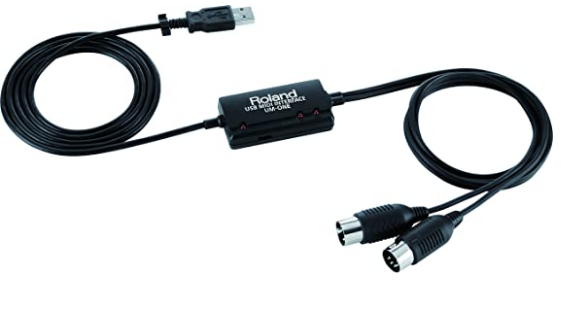
Audio cables are the links between your sound source and your amplifier. They are the one that carries all the information from your sound source to your amplifier. The sound quality will depend on how good the audio cables are.
There are many different types of audio cables in the market, but not all of them will be suitable for you. For example, if you want to use a long cable, then you need to make sure that it is shielded or has a twisted pair design. You also need to be careful about what type of connectors it has on both ends as well as its length and gauge.
A primer on equalization – what it is, where it came from, how it works, and how it differs from other types – will help clarify some of the mysticism around EQ tools and methods. An EQ is one of the most common types of audio processing. As well as boasting a sound’s volume, it can fix certain imperfections. A harmonious blend of sounds is created by cutting or boosting unwanted frequencies. If we know our mics won’t reject certain frequencies, we won’t have to worry about tinny cymbals, scratchy acoustic guitars, and sibilant vocals.
Overture is a composition in which two or more independent melodies are combined, the composer writing both parts at once and so combining the phrases of each into one connected whole. The first overtures were concert overtures, written for public performance; but they were soon employed (in opera) to announce changes in the scenery and to mark important moments in the action.
Musical composition in which successively entering voices repeat or imitate one or more themes and the voice parts are interwoven in a continuous harmony. A fugue is a composition technique that involves imitating a melody at various intervals and pitches. It is the most known form of contrapuntal music, which means that there are distinct melodies being played at the same time. While fugues are typically used in orchestral compositions, they are also used in modern music as well.
An interlude is a term used to describe a musical passage which serves as an interruption within the context of a larger piece. It is the opposite of an overture. The purpose of an interlude can be to create suspense or it may simply serve as a connecting bridge between sections of the piece, such as from one verse to another. Interludes are commonly used in operas and songs with multiple sections, but they can also be found in instrumental music, dance music and even some film music
We use cookies to ensure that we give you the best experience on our website. If you continue to use this site we will assume that you are happy with it.




 dearVR PRO 2