



The world of music production is undergoing a seismic shift. What once required years of technical expertise, expensive hardware, and trained ears can now be assisted—sometimes even accelerated—by machine learning. From automated EQ decisions to real-time mastering suggestions, AI-powered tools like LANDR and iZotope Ozone are redefining how producers approach mixing and mastering.
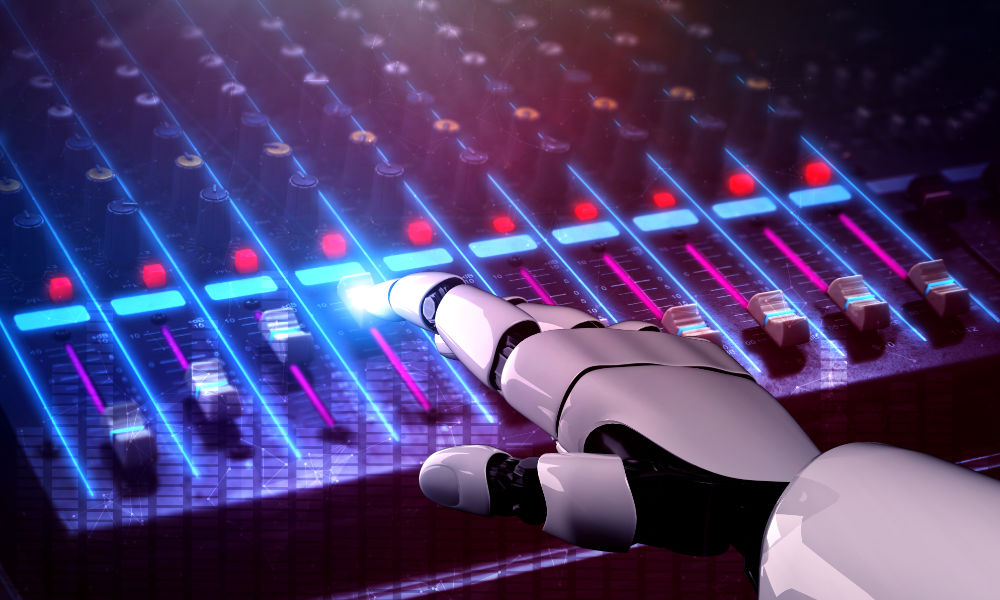
This blog explores how machine learning is transforming the final stages of music production—making them faster, smarter, and more accessible than ever.
What is Machine Learning in Mixing & Mastering?
Machine learning (ML) in audio production refers to algorithms trained on vast datasets of professionally mixed and mastered tracks. These systems analyze patterns in frequency balance, dynamics, stereo width, and loudness to make intelligent decisions.
Instead of manually tweaking every parameter, ML tools can:
Analyze your track’s sonic profile
Compare it with industry standards
Suggest or apply optimal processing chains
Automated mastering, for instance, uses algorithms to set EQ, compression, and loudness levels based on target references or predefined rules .
Rise of AI Mastering Tools
🎧 LANDR: Instant Cloud-Based Mastering
LANDR is one of the pioneers in online AI mastering. It allows users to upload a track and receive a mastered version within minutes.
Core capabilities:
Cloud-based processing (no DAW required)
Genre-based mastering styles
Loudness optimization for streaming platforms
LANDR is ideal for independent artists who need quick, affordable mastering without deep technical involvement.
iZotope Ozone: AI Meets Professional Control
iZotope Ozone is widely considered one of the most advanced AI-assisted mastering suites.
Its standout feature—Master Assistant—uses machine learning to:
Analyze your track in real time
Build a custom mastering chain
Suggest EQ, compression, and limiting settings
Unlike fully automated tools, Ozone allows deep manual control, blending AI assistance with human creativity.
Recent versions include:
Match EQ for reference-based mastering
Stabilizer for intelligent tonal balance
Imager for stereo width enhancement
Unlimiter, which uses ML to restore lost dynamics in over-compressed audio
Core ML Features in Modern Mastering
- Auto EQ & Intelligent Tonal Balance
Machine learning models analyze frequency distribution and adjust EQ to achieve a balanced sound.
Detects harsh frequencies or muddiness
Matches tonal curves to professional references
Uses dynamic EQ to adapt in real time
Ozone’s AI tools, for example, measure spectral balance and apply corrective EQ based on genre targets .
- Smart Compression & Dynamics Control
Compression is one of the most complex aspects of mastering. ML simplifies it by:
Automatically setting threshold, ratio, and attack
Preserving punch while controlling peaks
Avoiding over-compression artifacts
AI systems analyze loudness and dynamic range to apply optimal compression settings during automated mastering .
- Stereo Imaging & Spatial Enhancement
Modern AI tools enhance stereo width and spatial clarity.
Intelligent widening without phase issues
Mid/side processing optimization
Mono compatibility checks
Ozone’s Imager module, for instance, allows precise control of stereo spread while maintaining balance .
- Reference-Based Mastering
One of the most powerful innovations is reference matching.
Compare your track to a professionally mastered song
Match EQ curves, loudness, and stereo profile
Achieve genre-consistent sound instantly
Ozone’s Match EQ can analyze thousands of frequency bands to replicate a reference track’s tonal fingerprint with high precision .
- Real-Time Mix Suggestions
AI doesn’t just process—it advises.
Identifies masking issues between instruments
Suggests balance improvements
Recommends processing chains
Advanced AI assistants act as virtual mastering engineers, offering insights that help both beginners and professionals refine their mixes.
Benefits of Machine Learning in Audio Production
✅ Speed & Efficiency
AI can produce a polished master in minutes, drastically reducing production time.
✅ Accessibility
Independent artists no longer need expensive studios or engineers to achieve professional results.
✅ Learning Tool
AI suggestions help users understand mixing principles by showing what changes improve a track.
✅ Consistency
ML ensures tracks meet industry loudness and tonal standards across platforms.
Limitations & Human Touch
Despite its advantages, AI mastering is not perfect.
It may misinterpret artistic intent
Lacks emotional and creative judgment
Can over-process tracks if used blindly
Many producers see AI as a starting point, not a final solution. As one community insight highlights, AI tools are best used for speed and suggestions rather than full creative control.
The Future of AI in Mixing & Mastering
Machine learning is evolving rapidly, and future innovations may include:
Fully adaptive mastering for different playback devices
AI that understands emotion and genre nuance
Real-time collaboration between human engineers and AI
Rather than replacing engineers, AI is becoming a creative partner, handling technical tasks while humans focus on artistic expression.
Conclusion
Machine learning in mixing and mastering is not just a trend—it’s a transformation. Tools like LANDR and iZotope Ozone are democratizing music production, enabling anyone to achieve professional-quality sound.
However, the best results come from a hybrid approach:
AI for speed and precision, humans for creativity and emotion.
As technology advances, the line between engineer and algorithm will continue to blur—but the art of music will always remain deeply human.